Metal liquid forming, also known as casting, is a production method in which liquid metal is poured into a mold cavity that matches the shape and size of the part. After cooling and solidification processes, these metals ultimately form blanks or parts. The process flow includes filling of liquid metal, solidification shrinkage, and ultimately obtaining castings.

Liquid metal forming, also known as casting, has significant characteristics in this process. During the casting process, liquid metal is carefully poured into a carefully designed mold cavity, and after a series of cooling and solidification steps, these metals are ultimately transformed into the desired blanks or parts. This process not only involves complex steps such as filling and solidification shrinkage of liquid metals, but also focuses on the quality and performance of the final castings.
1.The metal liquid forming process can produce extremely complex shaped parts, especially those with complex internal cavity structures.
2. This process has wide adaptability and can cast various alloys, with almost unlimited casting size.
3. In terms of materials, the casting process has a wide range of sources, and waste can even be remelted and utilized, while equipment investment is relatively low.
4. However, the casting process also has certain limitations, such as a high scrap rate, relatively low surface quality, and relatively poor working conditions.
Next, we will further understand the classification of casting.
Sand casting, also known as "sand casting", is a casting method that involves injecting liquid metal into a sand mold, cooling and solidifying it to obtain the desired shape. This method has a long history and is still widely used in many industrial fields. Its advantages include low cost, flexible process, and the ability to adapt to casting needs of different materials and shapes. However, sand casting also has some shortcomings, such as relatively low production efficiency, high scrap rate, and difficulty in achieving highly accurate size control. However, sand casting still plays an indispensable role in many scenarios due to its simple and practical characteristics.

Sand casting, a method of manufacturing castings in sand molds, is widely used in the production of steel, iron, and most non-ferrous alloy castings. The process involves injecting liquid metal into the sand mold, cooling and solidifying it to obtain the desired shape of the casting.

Sand casting, as a method of manufacturing castings in sand molds, has a wide range of applications. The process mainly includes injecting liquid metal into the sand mold, cooling and solidifying it, and finally obtaining the desired shape of the casting. Next, we will delve into the technical characteristics of sand casting.
1.Sand casting is very suitable for manufacturing castings with complex shapes, especially those blanks with complex inner cavities;
2. It has a wide applicability and relatively low cost;
3. For some materials with poor plasticity, such as cast iron, sand casting is the only feasible process for manufacturing their parts or blanks.
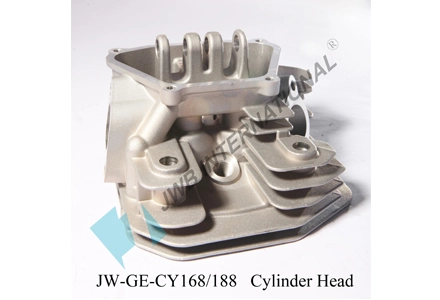
Actual application: Sand casting technology is used for castings such as cylinder block, cylinder head, and crankshaft of automobile engines.
Next, we will continue to explore another casting process - investment casting.

Investment casting, also known as "lost wax casting", is a unique casting process. It involves using fusible materials to first create a pattern, and then gradually covering the surface of the pattern with refractory materials to construct a shell. After the shape is melted, a mold without parting surfaces is formed inside the mold shell. After high-temperature roasting, this mold is ready to undergo the steps of sand filling and pouring.
Investment casting, known as "lost wax casting", is not only a unique casting technique, but also contains many key process points. The process involves refining the mold from a fusible material, and then covering the surface of the mold layer by layer with refractory material to construct a solid shell. After the shape melts, a precision mold without parting surfaces naturally forms inside the mold shell. After rigorous high-temperature roasting, this mold is now complete and can accept precise operations such as sand filling and pouring at any time.
1. Excellent dimensional and geometric accuracy;
2. Fine surface roughness;
3. Suitable for manufacturing castings with complex shapes and not limited by alloy types.
However, this process also has certain shortcomings, such as relatively complicated procedures and relatively high costs. However, investment casting still has a wide range of applications in the production field, especially suitable for manufacturing small components with complex shapes, strict precision requirements, or difficult to process through other processes, such as turbine engine blades.
Die casting is a process that uses high pressure to rapidly press molten metal into the cavity of a precision metal mold
By cooling and solidifying molten metal under pressure, the desired castings are formed.
Process characteristics and advantages
Die casting process, with its unique way, rapidly presses molten metal into the precision metal mold cavity under high pressure environment, cools and solidifies, and finally forms precise castings. This process not only has high production efficiency, but also precise casting dimensions and excellent surface quality, providing efficient and high-quality solutions for many manufacturing fields.
1. During the die-casting process, the metal liquid is subjected to high pressure and has a rapid flow rate.
2. The resulting castings have superior quality, stable dimensions, and excellent interchangeability.
3. The production efficiency of die-casting technology is extremely high, and at the same time, the service life of die-casting molds is relatively long.
4. It is particularly suitable for large-scale and large-scale production needs, thus bringing significant economic benefits.
However, the die-casting process also has certain shortcomings:
1.During the die-casting process, due to the high pressure and fast flow rate of the metal liquid, small pores and shrinkage porosity may sometimes form in the casting, which to some extent affects the quality of the casting.
2. Die castings have relatively low plasticity, so they are not suitable for working in environments that are subjected to impact loads or frequent vibrations.
3. When die-casting high melting point alloys, the lifespan of the mold will be shortened, which to some extent limits the scale expansion of die-casting production.
Despite these shortcomings, die-casting technology has been widely applied in multiple fields. Initially, it was mainly used in the automotive and instrument industries, but over time, its applications have gradually expanded to multiple industries such as agricultural machinery, machine tools, electronics, defense, computers, medical equipment, and more.
Low pressure casting is a method of filling a mold with liquid metal at a lower pressure (0.02-0.06MPa) and crystallizing it at that pressure to form a casting,widely used in multiple industries.

Technical features:
Low pressure casting technology has multiple significant characteristics, including its wide range of applicable metals, suitable for casting metals such as aluminum, copper, zinc, etc; At the same time, this technology has the characteristic of easy operation, reducing the need for complex processes. In addition, due to the low pressure maintained during the filling and crystallization processes of low-pressure casting, the casting is subjected to less stress during the formation process, effectively reducing internal defects in the casting. Therefore, low-pressure casting technology has been widely applied in multiple industries, such as automobile manufacturing, machinery manufacturing, etc., bringing significant economic benefits to the production of these industries.
1.The pressure and speed during pouring can be flexibly adjusted, allowing this technology to adapt to various types of molds, such as metal molds, sand molds, etc., thus meeting the needs of various alloys and castings of different sizes.
2. The bottom injection filling method is adopted, and the metal liquid performs smoothly without splashing during the filling process, which effectively reduces gas entrainment and erosion of the mold wall and core, thereby improving the qualification rate of castings.
3. Castings crystallize under pressure, resulting in a denser structure, clearer contours, improved surface smoothness, and enhanced mechanical properties, especially suitable for casting large thin-walled parts.
4. This technology eliminates the need for feeding feeders, greatly increasing the metal utilization rate to 90-98%.
5. Easy to operate, low labor intensity, improved working conditions, simple and easy to understand equipment, and easy to achieve mechanization and automation.
Application areas: Mainly used in the casting of traditional products, such as cylinder heads, wheel hubs, cylinder frames, etc.
Centrifugal casting: a casting technique in which molten metal is poured into a rotating mold, filled with centrifugal force, and solidified into shape.
The process flow is as follows:


Analysis of Process Characteristics and Advantages
This unique casting technology, with its distinct process characteristics, has occupied a place in the field of metal processing. The core of it is to inject molten metal into a rotating mold and use centrifugal force to achieve sufficient filling and solidification of the mold. This process is not only efficient, but also ensures the quality and performance of the castings.
1.During the centrifugal casting process, the molten metal is fully filled and solidified by centrifugal force in the high-speed rotating mold, almost without the need for additional gating and riser systems, thereby significantly improving the yield of the process.
2. Since there is no need to use cores to produce hollow castings, this process can significantly improve the filling ability of metals when manufacturing long tubular castings.
3. The castings produced by centrifugal casting have high density, reducing defects such as porosity and slag inclusion, thereby improving the overall mechanical properties of the castings.
4. This process is also suitable for manufacturing composite metal castings such as tubes and sleeves, providing manufacturers with greater flexibility.
Disadvantages:
Although centrifugal casting may not have many advantages, it also has its limitations. For example, in some cases, this process is used to produce castings with complex internal structures. In addition, for certain specific metals or alloys, special treatment may be required to ensure their ability to adapt to the centrifugal casting process.
1.Centrifugal casting may face certain challenges when producing castings with complex internal structures.
2. Due to the effect of centrifugal force, the diameter of the inner hole of the casting may not be precise enough, and the surface of the inner hole may be relatively rough, resulting in poor quality and increased machining allowance.
3. In addition, castings are prone to specific gravity segregation during centrifugal casting.
Application: Centrifugal casting was initially mainly used for the production of cast pipes. Nowadays, this process has been widely used in multiple industries such as metallurgy, mining, transportation, irrigation and drainage machinery, aviation, national defense, and automobiles, for the manufacture of steel, iron, and non-ferrous carbon alloy castings. Among them, the production of castings such as centrifugal cast iron pipes, internal combustion engine cylinder liners, and shaft sleeves is particularly common.
Metal mold casting is a molding technique that involves filling a metal mold with liquid metal under the action of gravity, and then naturally cooling and solidifying it to obtain the desired casting.
The process flow includes multiple key steps to ensure the quality and performance of the castings.

Process characteristics and advantages
The process characteristic of metal mold casting is that it obtains the desired casting by natural cooling and solidification of liquid metal in the metal mold. This process not only simplifies the forming steps, but also helps improve the quality and performance of the castings. In addition, metal casting also has the following significant advantages:
1.Metal molds have excellent thermal conductivity and heat capacity, allowing castings to cool quickly and obtain castings with dense structure and superior mechanical properties. Compared to sand castings, their performance is improved by about 15%.
2. Metal mold casting can produce castings with high dimensional accuracy and low surface roughness, while ensuring the stability of casting quality.
3. This process reduces the use of sand cores, helps improve the production environment, reduces the emission of dust and harmful gases, and reduces labor intensity.
However, there are also some shortcomings in metal casting, such as relatively high mold production costs and the possibility that it may not be suitable for the production of large or complex castings in some cases. However, its advantages are still evident, making metal mold casting the preferred casting method in many applications.
1.The metal mold itself does not have breathability, so specific measures need to be taken to eliminate the air inside the mold cavity and the gas generated by the sand core.
2. The metal mold lacks yielding ability, which may lead to cracks in the casting during solidification.
3. The manufacturing process of metal molds is relatively complex, with a long cycle and relatively high costs. Therefore, the economy of metal mold casting can only be fully demonstrated when large-scale mass production is required.
In terms of application, metal mold casting is very suitable for mass production of non-ferrous alloy castings such as aluminum alloys and magnesium alloys with complex shapes. At the same time, it can also be used to produce castings and ingots of steel and metal.

By extracting gas from the mold cavity during the die-casting process, effectively eliminating or significantly reducing porosity and dissolved gases in the die-casting parts, thereby improving the mechanical properties and surface quality of the die-casting parts. The process flow is as follows:
Process characteristics:
advantage:
1. By vacuum casting, it is possible to effectively eliminate or significantly reduce the porosity inside the die-casting parts, thereby greatly improving their mechanical properties and surface quality, and further improving their plating performance.
2. This process reduces the back pressure of the mold cavity, making it possible to use small machines to cast larger castings even with lower specific pressures and alloys with poor casting performance.
3. In addition, vacuum casting improves the filling conditions, allowing for the production of thinner castings through die-casting.
However, despite the many advantages of vacuum casting, there are still some potential drawbacks that need to be considered when applied.
1. The sealing structure of the mold is relatively complex, and there are certain difficulties in its manufacturing and installation process. Therefore, using vacuum casting method will bring high cost burden.
2. If the control measures of vacuum die casting method are not properly implemented, its effect may not be significant and its advantages may not be fully utilized.
Next, we will explore another casting method - squeeze casting.

Squeeze casting is a casting method that solidifies and flows liquid or semi-solid metal under high pressure, which can directly produce parts or blanks. This technology not only improves the utilization rate of liquid metal, but also simplifies the production process, ensuring the stability of quality. As an energy-saving metal forming technology, squeeze casting has shown broad application prospects.
Direct squeeze casting process: First, spray the coating, then pour the alloy, then close the mold, apply pressure and maintain it for a certain period of time, and gradually release the pressure. After completion, divide the mold to release the blank from the mold and complete the reset action.
The process of indirect squeeze casting is different: first spray paint and close the mold, then feed and fill the mold, apply pressure and maintain it, and finally release the pressure. Similarly, after completing the mold separation, the blank is demolded and reset.
In addition, squeeze casting also has the following technical characteristics:
1.Can effectively eliminate various internal defects of castings, such as porosity, shrinkage, and looseness;
2. Its surface roughness is relatively low, while its dimensional accuracy is relatively high;
3. This process can effectively prevent the occurrence of casting cracks;
4. This process is very suitable for achieving mechanization and automation production.
In addition, squeeze casting technology has a wide range of applications in alloy production, whether it is aluminum alloy, zinc alloy, copper alloy or ductile iron, all can be efficiently manufactured through this technology.

It is an innovative casting method. It involves bonding paraffin or foam models with dimensions and shapes similar to castings to form model clusters. After being coated with refractory paint and dried, these models will be buried in dry quartz sand and shaped through vibration. When pouring in a negative pressure environment, the models will vaporize, and liquid metal will occupy the positions of these models. After solidification and cooling, the desired casting is finally formed. The process flow includes pre foaming, foam forming, coating immersion, drying, shaping, pouring, sanding, and cleaning steps.

Technical features:
The lost foam casting technology stands out with its unique characteristics. Firstly, it can easily cast castings with complex shapes, which is difficult to achieve with traditional casting methods. Secondly, this technology does not require mold removal, simplifies the production process, and shortens the production cycle. In addition, due to the use of refractory coatings and dry quartz sand, the castings have excellent surface quality and dimensional accuracy. At the same time, this technology also has the characteristics of energy conservation and environmental protection, which meets the requirements of sustainable development.
1. The casting has high precision and does not require sand cores, thereby reducing processing time.
2. This technology has no restrictions on the parting surface, making the design more flexible and giving designers higher degrees of freedom.
3. Adopting clean production methods, with no pollution emissions and superior environmental performance.
4. Through lost foam casting, investment and production costs can be reduced, and economic benefits can be improved.
Widely applicable, suitable for producing complex castings of various sizes and precision, without being limited by alloy types and production batches. For example, it can be used to manufacture components such as gray cast iron engine casings and high manganese steel bent pipes.
The core principle is to continuously pour molten metal into a specially designed crystallizer. Here, the metal gradually solidifies (crust), while the casting is continuously pulled out from the other end of the crystallizer. This process enables efficient and precise production of castings of any length or specific length.

Technical features:
The characteristics of continuous casting technology are mainly reflected in its efficient and precise production capacity. By continuously pouring molten metal into the crystallizer and utilizing the gradual solidification process of the metal, this technology can achieve continuous production of castings of any length or specific length. This efficient casting method not only saves time and resources, but also ensures the high quality and consistency of castings.
1. Metal crystallization is rapid and dense, with a uniform structure, ensuring good mechanical properties.
2. This technology can effectively save metal materials and improve metal yield.
3. Simplified the casting process, eliminated tedious steps such as molding, reduced labor intensity, and significantly reduced the required production area.
4. The continuous casting production process is easy to achieve mechanization and automation, thereby greatly improving production efficiency.
In addition, the continuous casting method is very suitable for casting materials such as steel, iron, copper alloys, aluminum alloys, magnesium alloys, etc., and can produce long castings with unchanged cross-sectional shapes, such as ingots, slabs, bars, pipes, etc.