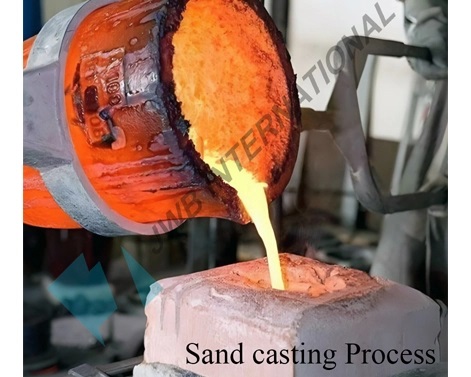
Sand Casting has long been recognized as one of the most versatile and cost-effective manufacturing processes for producing complex metal parts. In the construction machinery industry, the demand for durable and precisely shaped components makes sand casting an essential technique. This process involves creating a mold from sand, into which molten metal is poured to form parts with specific geometries and dimensions. Because of its adaptability, sand casting is capable of producing large, heavy, and complex parts that are often used in machinery such as excavators, bulldozers, and cranes. JWB, with its extensive expertise in custom-made metal manufacturing, incorporates sand casting to deliver reliable solutions that meet international standards for construction machinery applications.
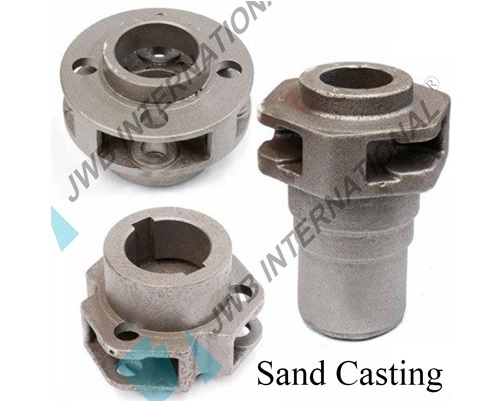
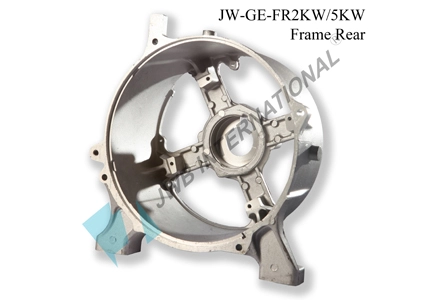
The construction industry requires components that can endure significant mechanical stress, and sand casting provides exactly that advantage. One of its key strengths is the ability to manufacture parts with thick walls and heavy weight, making them ideal for construction machinery frames, housings, and support systems. In addition, sand casting offers high flexibility in design, enabling manufacturers to create intricate shapes that would be difficult or costly with other processes. Another advantage lies in material versatility, as sand casting can be applied to a wide range of metals including steel, iron, and various alloys. This makes it possible to match the mechanical properties of components with the specific requirements of different construction equipment.

When evaluating manufacturing methods for construction machinery components, both sand casting and investment casting are common choices. However, they differ in performance and cost.
Feature | Sand Casting | Investment Casting |
Component Size | Suitable for large and heavy parts | Better for small and medium-sized parts |
Design Complexity | Capable of complex but less detailed surfaces | Ideal for high-precision, intricate details |
Surface Finish | Rougher surface, requires machining for smoothness | Superior surface finish with less machining |
Cost Efficiency | Lower tooling cost, economical for large parts | Higher tooling cost, cost-effective for small runs |
Production Speed | Faster for large-scale heavy parts | Longer lead times due to complex processes |
This comparison highlights why sand casting remains the preferred method for construction machinery, especially when producing large, durable components where strength and size outweigh surface finish precision.

In construction machinery, Sand Casting is applied to create critical components that define both performance and reliability. For example, engine blocks and cylinder heads are often produced using sand casting due to the need for robust structures that can endure high pressure and temperature. Gear housings and transmission parts also benefit from the technique, ensuring that machinery can operate smoothly under heavy loads. In addition, large counterweights and structural components for cranes and excavators are typically sand-cast, providing the necessary mass and strength to support demanding operations. The process ensures that each part aligns with the mechanical standards required in the field, enabling construction machinery to maintain durability and performance even in extreme working environments.
As construction machinery continues to evolve with greater emphasis on efficiency, strength, and environmental considerations, Sand Casting will remain an indispensable manufacturing process. Its ability to accommodate different alloys, produce large and durable components, and adapt to design innovations ensures that it will continue to play a central role in the industry. With ongoing advancements in casting technologies, surface treatments, and machining techniques, sand casting will not only meet current demands but also support the future growth of construction machinery manufacturing.